Spotlight on: Newquay
-
Over the last few months, we’ve been reflecting with our Partners on what is enabling their progress on the ground.
We’re seeing that the most impactful work is happening when we stop thinking in “school silos” and start focusing on the neighbourhood level.
We call this the "cluster" approach—moving from a system of vertical institutions to one of horizontal, local connection.
We’ve recently published two articles in our Fieldbook series that explore this shift in detail:
“The Mismatch” explores why even the best schools hit a "structural ceiling" when they work alone.
“Staking the Ground”looks at the "hardware" we need to build to make collaboration a reality rather than just a nice idea.
In this spotlight, we wanted to show what this looks like in practice. The Newquay Convening Partnership offers a compelling example of what happens when we reorient our shared focus towards "beyond the school gates" and towards the neighbourhood level.
Most people know Newquay through a postcard view: the surf at Fistral Beach, the energy of the Boardmasters Festival, a sun-drenched holiday town.
But for the 4,430 children growing up here, another lens reveals a much tougher reality. Once the tourists go home, the seasonal economy leaves behind a landscape of turbulence. The very things that make the town thrive in August—low-wage service jobs and a fluid labour market—create a "daily obstacle course" for local parents in January.
When leaders from Kernow Learning began deep listening with families, they found a stark mismatch. On paper, the local system looked functional. In practice, it was full of structural barriers—from insecure work hours that don't match school gates to a lack of transport that leaves families stranded.
By looking past the postcard, the partnership identified that Newquay wasn't suffering from a lack of potential, but from a "fractured architecture" that made stable family life unnecessarily hard.
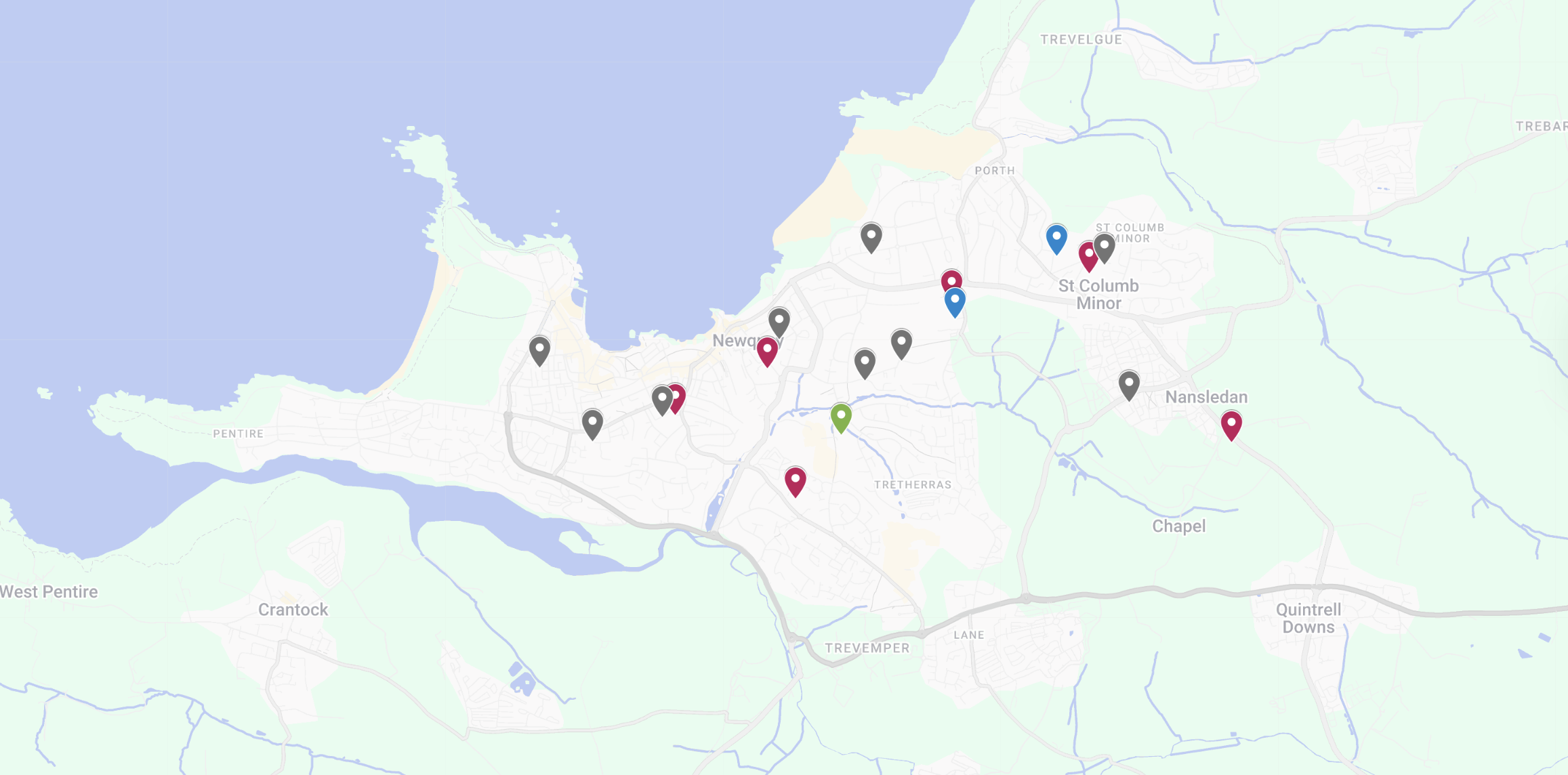
A map of educational institutions in Newquay (🔴 = Primary phase, 🔵 = Secondary, 🟢 = FE, ⚫️ = Other)
Identifying fractures
When local leaders began to map this terrain, they moved beyond general observations of "deprivation" to identify specific fractures in the local system.
One fracture was a total disconnect between the primary school day and the working hours of parents. This meant that despite the best efforts of individual schools to offer enrichment activities and after-school clubs, families were being impacted by the lack of childcare support in the town.
This didn't seem to be a case of funding challenges, but a lack of coordination between well-intentioned services and local organisations that left families feeling isolated and providers feeling ineffective. This specific point of failure became the catalyst for change.
The response to this fracture was not to simply layer on a new project, but to fundamentally "rewire" how the town operates through the formation of the Newquay Convening Partnership.
This work was centered on establishing a “town square” dynamic—creating the physical, mental and relational space to identify and address issues and opportunities within the town. This was anchored at Newquay Orchard, a hidden gem of a social enterprise that, until this partnership, had been largely unknown to local schools. Their vision:
To equalise the landscape and to eradicate inequality of opportunity. We want children and their families not to be hampered by their socio-economic backgrounds.
For the first time, a diverse group—from housing developers and local businesses to health services and the council—stopped working in isolation. To move from talk to action, the partnership formed specific working groups. These groups allow partners to drill down into purposeful, local issues—like childcare or transport—rather than getting lost in vague generalities.
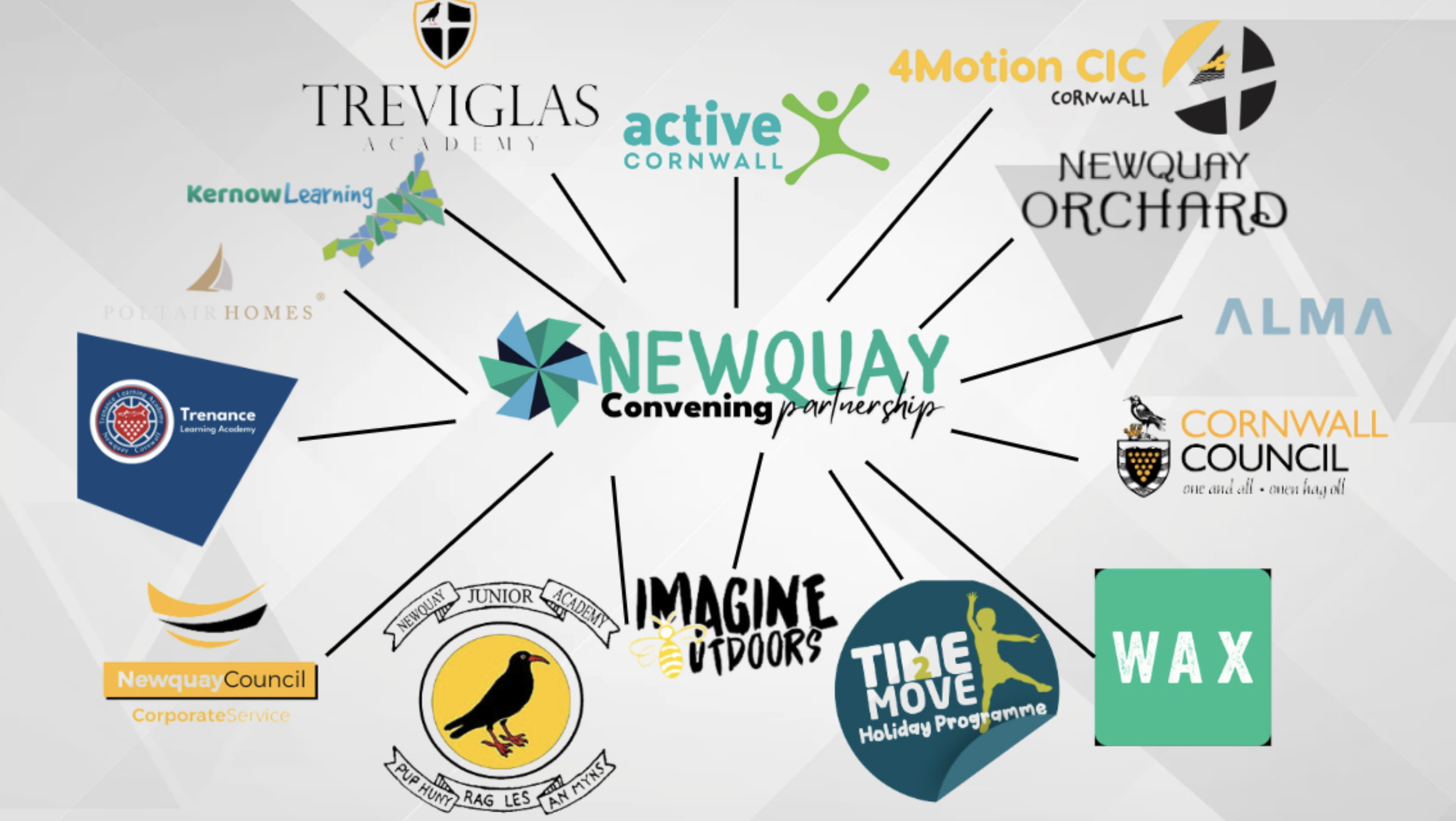
The immediate result of this coordination has been a significant reduction in duplication. Instead of three different organisations trying to solve the same problem in three different ways, resources are now being pooled. Not only does this save money, but it also creates a more coherent experience for families who no longer have to navigate a maze of overlapping services.
Sharing the load
This subtle "rewiring" has provided immediate structural relief for the town's leaders. Before the partnership, headteachers were acting as a default social safety net, carrying the weight of the community’s challenges alone. Now, that responsibility is shared. By creating a trusted, functional mechanism to catch problems as they arise, the partnership has significantly reduced the "mental load" of leadership.
The ultimate dividend, however, is being paid to the children and families of Newquay. Decisions about childcare and family support are now being shaped by the actual voices of families, ensuring that the "daily obstacle course" is being dismantled piece by piece. Newquay is finally building the permanent infrastructure of opportunity its children deserve.