Spotlight on: South Solihull
-
Over the last few months, we’ve been reflecting with our Partners on what is enabling their progress on the ground.
We’re seeing that the most impactful work is happening when we stop thinking in “school silos” and start focusing on the neighbourhood level.
We call this the "cluster" approach—moving from a system of vertical institutions to one of horizontal, local connection.
We’ve recently published two articles in our Fieldbook series that explore this shift in detail:
“The Mismatch” explores why even the best schools hit a "structural ceiling" when they work alone.
“Staking the Ground” looks at the "hardware" we need to build to make collaboration a reality rather than just a nice idea.
In this spotlight, we wanted to show what this looks like in practice. The South Solihull Partnership is a powerful example of eleven schools doing the hard work of "rewiring" their local system—aligning everything from their Geography curriculum to their family support teams—to ensure no child falls through the gaps.
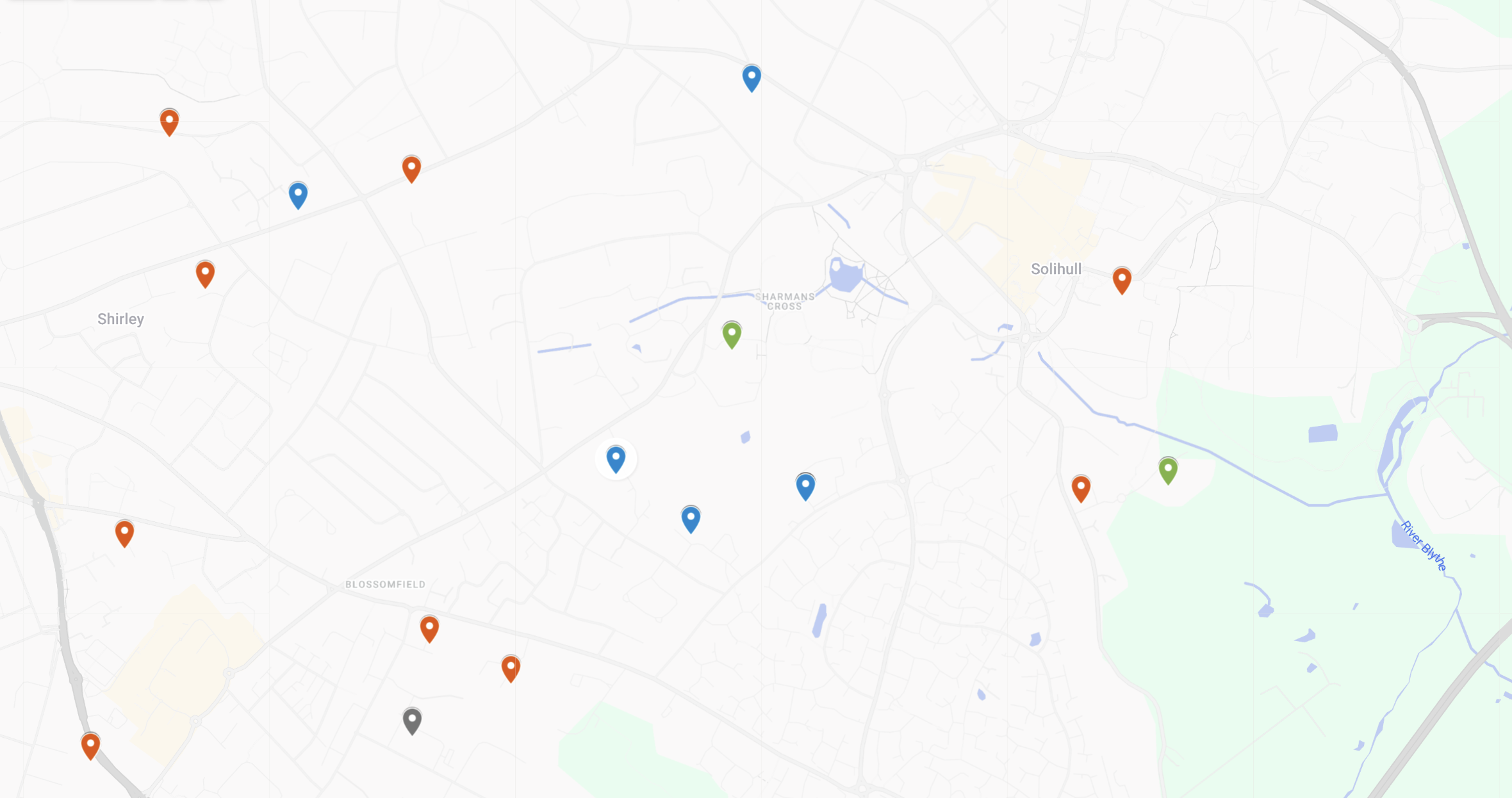
A map of educational institutions in South Solihull (🔴 = Primary phase, 🔵 = Secondary, 🟢 = FE, ⚫️ = Other)
The South Solihull Partnership came together around eleven schools whose pupils progressed through their schooling between the infant, junior, primary and secondary schools in the group. Their collaboration was driven by a sense of an opportunity that they weren’t taking, and by shared challenges around SEND and transitions between their schools.
‘We were in a bigger “cluster” set up by Solihull LA, which was useful but a bigger group and area which felt less relevant to the work we felt we could do together,’ says headteacher of Alderbrook School, Tom Beveridge.
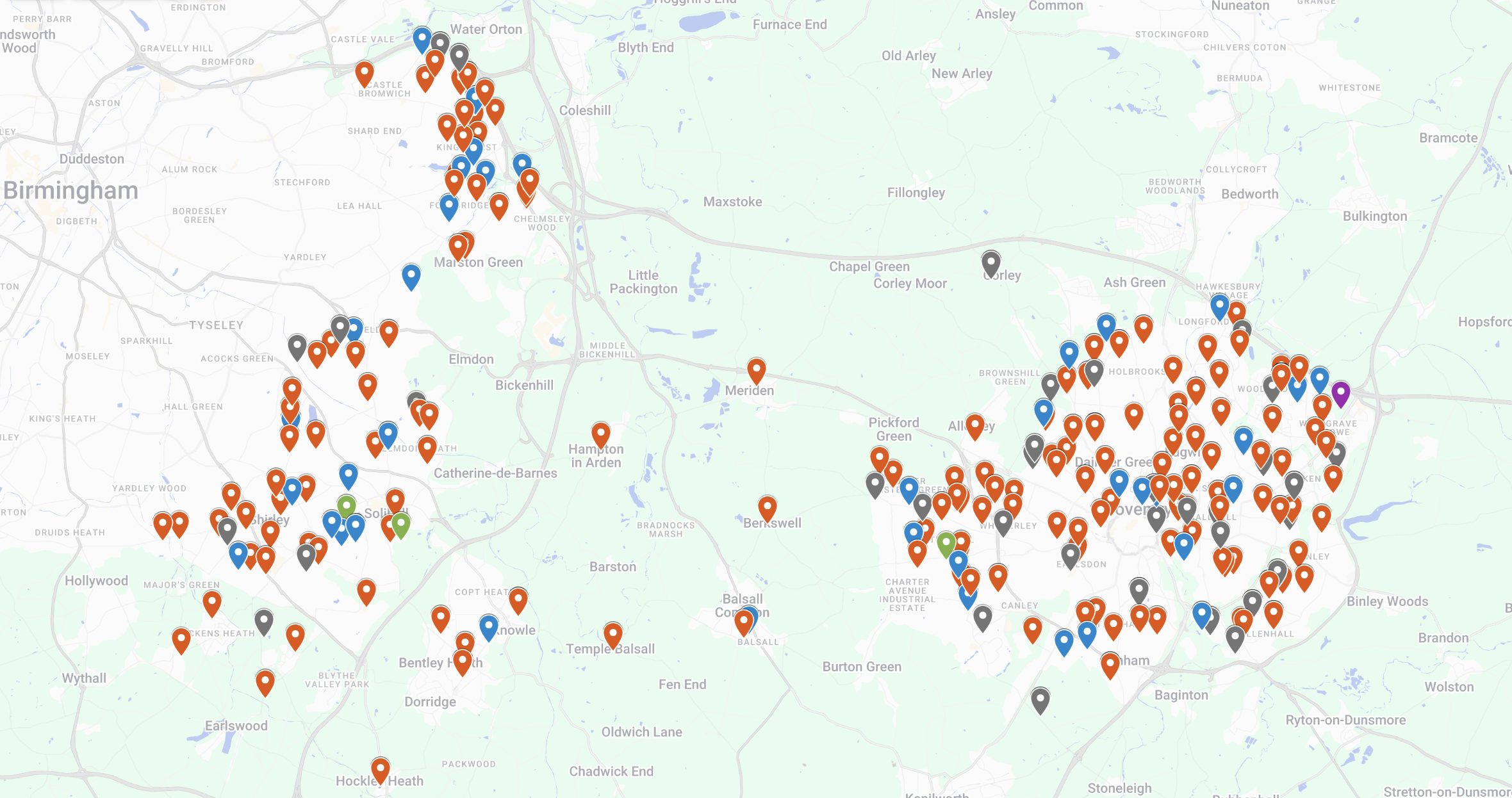
A map of educational institutions in the Solihull area (🔴 = Primary phase, 🔵 = Secondary, 🟢 = FE, ⚫️ = Other)
They identified that across the age range, students and families in their neighbourhood were facing similar challenges, and that schools’ ability to support them would be far greater if they worked together in partnership. They recognised that building stronger relationships between headteachers, senior leaders and wider staff teams, would only have a positive impact on their insight and understanding, and the knowledge of resources at their disposal.
Purposeful adjustments to the curriculum and training
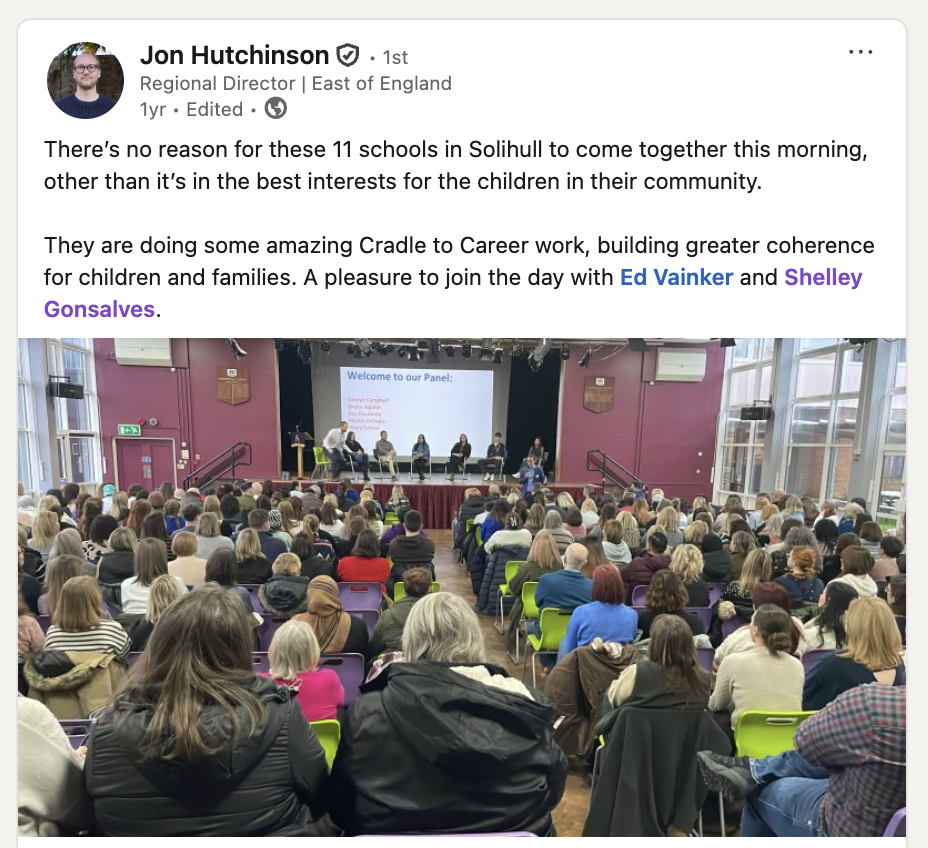
Over the last three years the Partnership has made significant progress in ‘re-wiring’ the system around children in South Solihull. There have been purposeful adjustments to the curriculum across schools. Starting with Geography, subject leaders came together and made small tweaks to instruction and assessment, aligned around vocabulary used and made it easier for pupils to understand the journey they were on in that subject. Cross-phase subject communities now exist in all subjects and leaders are working together to refine the experience pupils are having, while accessing high quality CPD and building relationships across phases and schools.
Enhanced transition and provision
A significant investment has been made around transition, with more intentionality around early support, including a programme for primary-aged students at the secondary school with Solihull Music Service and a transition Summer School launched. One of the biggest successes has been a shared CPD offer for support staff across schools, delivered half-termly. This has fostered further relationships between this important workforce, which has supported a relational handover between pupils with SEND and their families between schools.
Building a bigger tent
Another way in which the Partnership is driving change is through work beyond the school gates. Leaders convene regularly with the voluntary and community sector, and the Local Authority and are seeing partnerships bring investment in their communities, including a youth club launching in one primary school and stronger integration with the Family Hub.
These relationships have supported the Partnership to take the lead on change across Solihull, including Solihull IRL, a collective action project funded by the Fairer Futures initiative to put in place a cross-sector partnership to reduce students’ access to damaging social media and smartphone use.
Across these different strands of work, leaders in Solihull are seeing a positive impact on young people’s transitions, on their participation and engagement, particularly for those from the most underserved communities. Staff are energised by this work, and more resources are coming into the community as a result of the relationships that have been built.